



“Do I need to choose my brand colors using a Pantone scale? Does my business need this?”. If you’ve ever seen a designer holding that colorful paper fan with great care, as if it were a treasure, you’ve likely encountered a Pantone® scale. The truth is, the world of colors is both fascinating and confusing. Among so many shades and possibilities, Pantone scales help bring precision and confidence to those working in design. But do they really make sense for small and medium-sized brands?


“The idea that the color spectrum is seen and interpreted differently by each individual led to the invention of the Pantone Matching System, a standard color guide in fan or chip format.”
Yes, we use these scales in all of our Beloved Brand projects. We’ve prepared this text to clear up common doubts and highlight what’s important to know, especially for those with a growing business.
1 – What is a Pantone color scale?
Pantone is a company that’s dedicated to one thing: colors. They create highly precise scales that function like catalogs, made so that designers and printers can communicate in a standardized way. This means that a color chosen here will appear exactly the same when printed elsewhere, even if the print job happens on the other side of the world. To ensure this standardization, Pantone takes care of every detail in pigment mixing and prints these scales on different types of paper.
Each color gets a unique code, almost like its own name. So, if you choose Pantone 2905C, for example, you can trust that this shade of blue will be recognized the same way by anyone printing your packaging, business cards, or stationery, whether they’re in Japan or São Paulo. Beyond graphic design, these scales are also used in other fields like fashion, architecture, photography, and art. But here, we’re focusing on what really matters for your business: how all of this connects to building your brand.

The Pantone scale appears quite often in our daily work. Photo: Carol Lá Lach. Learn more about our Beloved Brand projects.
2 – Should my business’s colors be chosen from the Pantone scale?
Not necessarily. The Pantone scale is a very useful tool, but it comes into play at a more technical stage, once the colors have already been chosen, and it’s time to ensure everything prints correctly. That’s why the most common (and enjoyable!) approach is to start in a different way. When choosing your brand colors, the best path is to begin with the essence of your business. It could be the color of your product, a combination that connects to the company’s story, shades found in nature, sentimental objects, or even visual memories that inspire you. We also consider the visual repertoire of the person creating the design and everything gathered in the project’s reference board. This is how the color palette comes to life, in a unique and meaningful way. Once these colors are defined, we look for the closest shades in the Pantone scale. This really helps maintain consistency, especially when a printing company is involved in the process.
That’s what we did with Almadoré, a chocolate brand that started with three flavors in the original line: white, milk, and intense. The first choice was to use the colors of the actual bars. Then, we combined others to accompany them: a soft blue for the white, a green for the milk, and an orange for the intense. These same colors also appeared in the characters on the packaging, creating a cohesive and charming visual for Almadoré. In the end, defining the Pantone codes for each color was essential for the printer to reproduce everything with accuracy and care.
+ Also read – Naming: How to Pick the Ideal Name for Your Company

Each Almadoré chocolate has its own special color. The project won a bronze medal at the Brasil Design Award in the Packaging category. Photo: Carol Lá Lach. See the full project.
3 – What do small businesses need to know about the Pantone color scale?
If you own a small or medium-sized business, the most important thing is to have clarity about what your brand’s colors are, the ones that will accompany your communication, your products, and your visual presence in the world. And more than just choosing them well, it’s crucial to ensure that these colors are consistently reproduced across all materials. This is where the Pantone scales come into play. When a visual identity project is created by a professional, they should specify the numerical references for each chosen color. This includes the RGB codes (for screens), CMYK codes (for regular printing), Hex codes (for websites and social media), and Pantone codes (for special-color printing). These details are usually found in the visual identity’s usage guide and are essential for keeping everything aligned, no matter the format.
That’s what happened with Amanaki, a footwear brand that values classic and timeless style. The palette we created for them includes neutral tones like beige, khaki, black, and white. By defining the corresponding Pantone codes for these colors, we ensured that when printing shoe boxes, shipping labels, or stickers, the result would always be faithful to what was planned. This gives the company peace of mind and conveys more care and professionalism to those on the other end, receiving the beautiful packages from the Beloved Brand Amanaki.
+ Also Read – Is my brand looking good? How to evaluate your company’s visual identity

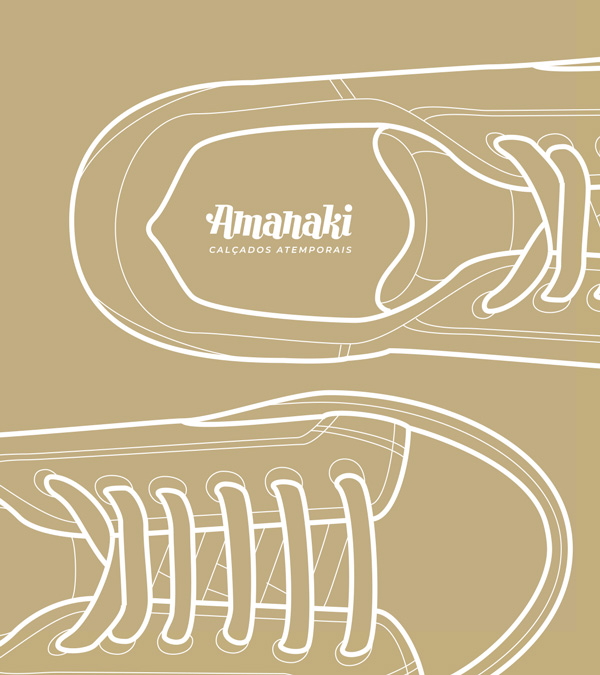
At Amanaki, the colors defined with the Pantone scale appear everywhere, but the Pantone codes were used to standardize the boxes, packaging, and stationery items. See the full project.
4 – Will the printed color be identical to the one on the Pantone scale?
When the brand color is chosen from the Pantone scale, the chances of the printed result being very close are high. But it’s important to know: the color is rarely going to be exactly the same. This happens because the most common printing process is called CMYK, which mixes four colors: Cyan, Magenta, Yellow, and Black, to create thousands of shades.
Even with this difference, the Pantone scale remains a very reliable reference. It’s like a meeting point: we know where we’re starting from and where we want to end up. And that gives confidence to everyone involved in the process, from the person who created the identity to the one doing the printing.
In some cases, the printer uses only one or two colors. In this situation, it’s possible that the Pantone color chosen is used directly in the print, which we call a “special color”. This also happens when the brand uses vibrant or metallic colors that can’t be achieved just with CMYK. In other words, using the Pantone scale is not just a technical detail: it’s a way to ensure that what was envisioned in the visual project will come to life with care and precision. And this is invaluable, especially for small businesses that pay attention to every detail with such affection.
+ Also Read – I Didn’t Approve the Brand Created for My Business. Now What?
5 – Can the Pantone color scale reproduce all the colors in the world?
The Pantone scale can reproduce thousands of colors, but not all of them. And that’s okay. Because the truth is, few things are as rich, creative, and surprising as the colors we see in nature or that appear in our daily lives, often in unexpected ways. Still, Pantone dedicates itself to translating this beauty into palettes that grow every year, with new possibilities. In addition to the traditional colors, there are also metallic options, like gold and silver, pastel shades, and even neon colors.
In the Beloved Brand project for the Plumita psychology clinic, for example, we chose a vibrant and full-of-personality palette: intense orange, moss green, lilac, and dark green. Since the clinic’s focus is on children and teenagers, we wanted to avoid the overused light greens and blues typically found in the healthcare field. Plumita values authenticity and warmth, so the palette had to reflect that. And even if, someday, the clinic moves or renovates its space, the Pantone codes will be there as allies. They ensure that the colors, chosen with so much care, will continue to be present, helping to tell the same story with the same attention, anywhere.
+ Also read – Live meetings: what if they weren’t necessary?


Plumita shows how color consistency can go beyond paper and reach physical spaces, like the child and adolescent psychotherapy clinic. See the full project.
6 – Do all companies need a Pantone scale?
This is a common question, especially among those taking their first steps in building their brand identity. But the truth is, no: unless the company frequently works with design, printing, or visual material production, it’s not necessary to have a Pantone scale in the office. The people who really need to have it around are design professionals and printers, who deal daily with decisions involving color accuracy. For them, the scale is an essential tool. For other businesses, the important thing is to have a well-defined color palette and to include Pantone codes in the visual identity project references. That way, whenever it’s necessary to produce something: a package, a uniform, a sign, the printer or supplier will know exactly which tone to follow.
That’s what happened with the Beloved Brand project for Crizáli, a company that specializes in building waterproofing. Although they don’t work with colors daily, when we created Crizáli’s identity, we decided to step away from the obvious choices in the sector and went with a very unconventional trio: red, purple, and beige, in specific shades. Even though the company doesn’t need to have a Pantone scale on hand, the defined codes help, for example, when applying these colors to items like helmets. With the right reference, the supplier knows exactly which shade to use, and the company can keep its identity alive in every detail.

Crizáli works with 3D projects and doesn’t need a Pantone scale, but its palette is defined in the brand usage guide. See the full project.
Conclusion: What is Pantone and what is it for?
The Pantone color scale is a great ally when it comes to standardization. And standardizing a brand’s colors goes far beyond an aesthetic matter; it’s an important step to ensure recognition, professionalism, and consistency at every touchpoint with the public. When there’s no reference, each person may see a different color, each screen shows a different shade, and each printer delivers an unpredictable result. But with the Pantone scale, everyone speaks the same language, whether at a local print shop or in another country. It helps to keep the visual identity true to its essence, just as it was envisioned. And for those who love the world of colors, Pantone has much more to offer: beautiful products, special collections, and even the famous “Color of the Year”, which inspires professionals worldwide.
+ Also read – How Does a Visual Identity Come to Life? Our Step-by-Step Methodology
Does it make more sense now why the Pantone scale can be so valuable for brands, especially small and medium ones? If you have any questions, feel free to reach out to us, we’d love to chat about it with you. Does your business need a Beloved Brand? Let’s create it together, request a proposal!